How Much Exercise Does a GSP Need Daily? (By Age Guide)
German Shorthaired Pointers are one of the most energetic hunting dog breeds in the world. If you’re considering getting one — or already have one — you’re probably wondering:
How much exercise does a German Shorthaired Pointer actually need each day?
The short answer: a lot more than most dogs.
A healthy adult German Shorthaired Pointer typically needs 90 minutes to 2 hours of daily exercise, and much of that exercise should be high-intensity activity rather than slow walks.
Without enough exercise, GSPs can quickly develop destructive behaviors like chewing, digging, barking, or escaping the yard.
In this guide, we’ll break down exactly how much exercise your GSP needs based on age, lifestyle, and hunting activity.
Why German Shorthaired Pointers Need So Much Exercise
German Shorthaired Pointers were originally bred as all-purpose hunting dogs capable of running miles across fields while locating birds.
Because of this background, they have:
- extremely high endurance
- strong prey drive
- high mental stimulation needs
- intense physical energy
A simple 20-minute neighborhood walk usually isn’t enough for this breed.
Instead, GSPs thrive with activities like:
- running
- hiking
- bird dog training
- retrieving drills
- off-leash field exercise
- swimming
If you’re exercising your dog in warmer weather, it’s also important to understand how to prevent overheating.
See our guide: Heat Management for High Drive Hunting Dogs.
Many owners also carry a collapsible dog water bowl during longer exercise sessions to keep their GSP hydrated.
Exercise Needs by Age
GSP Puppies (2–12 Months)
Puppies have tons of energy but should not be over-exercised while their joints are developing.
A good rule of thumb is:
5 minutes of structured exercise per month of age.
Examples:
- 3-month puppy → 15 minutes
- 6-month puppy → 30 minutes
- 9-month puppy → 45 minutes
Unstructured play in the yard is fine, but avoid long forced runs.
Good puppy activities include:
- short training sessions
- retrieving games
- social walks
- light scent games
Lightweight puppy training bumpers are great for short retrieving sessions that help burn energy without overworking young joints.
Adolescent GSPs (1–2 Years)
This is when German Shorthaired Pointers become absolute energy machines.
Most dogs in this stage require:
1.5 to 2+ hours of daily exercise
Ideally a mix of:
- running
- training drills
- retrieving work
- off-leash exploration
Many owners find that mental stimulation is just as important as physical exercise at this age.
Training sessions often tire a GSP out faster than walking.
Using a long training check cord allows young dogs to run and explore safely while still maintaining control during training.
Adult GSPs (2+ Years)
Fully mature GSPs still require significant daily activity.
Most adult dogs do best with:
90 minutes to 2 hours per day
This can include:
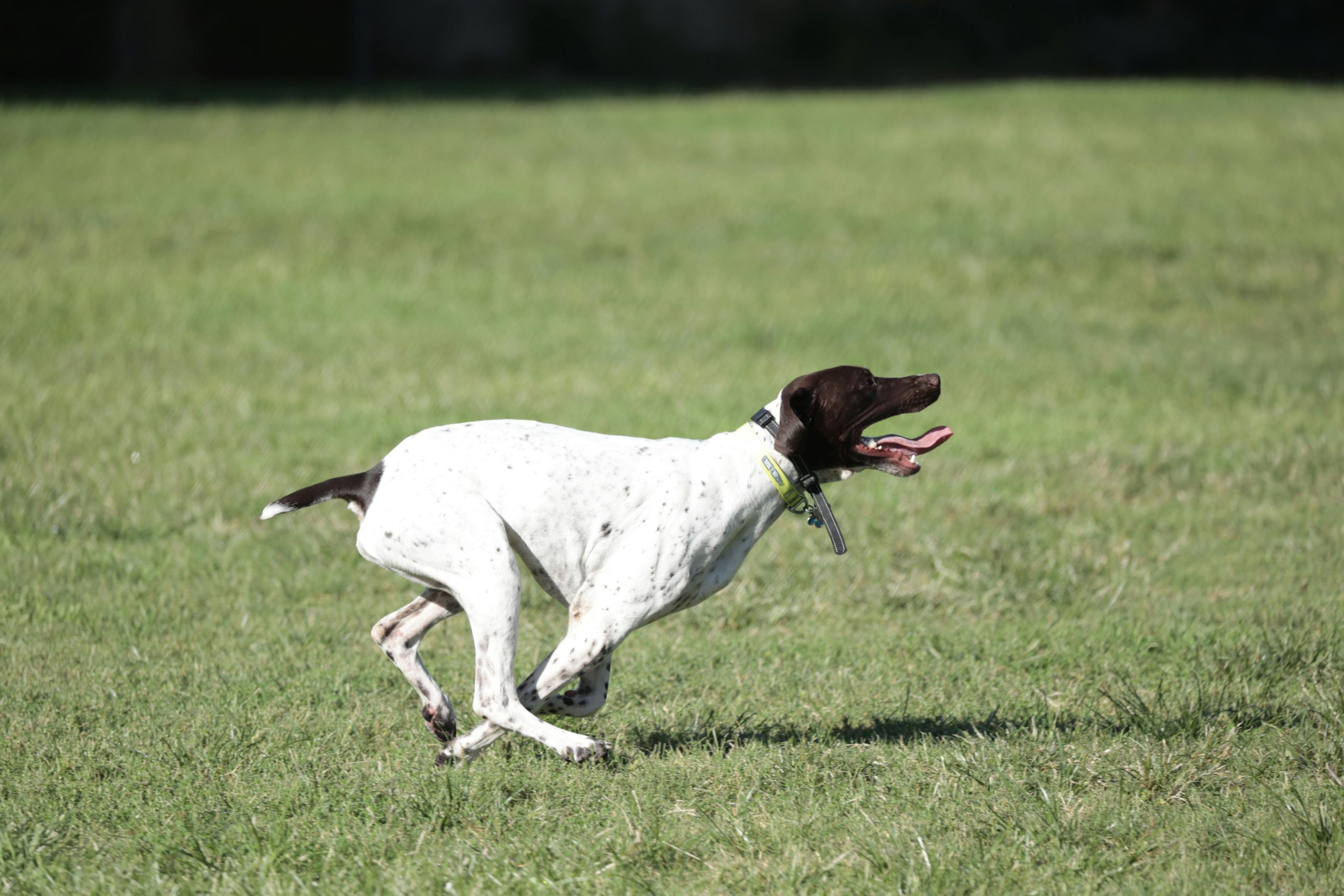
- off-leash running
- hunting training
- hiking
- fetch sessions
- swimming
Hunting dogs that work during the season often get far more exercise than this, sometimes covering several miles in a single hunt.
Many hunters use GPS tracking collars during off-leash exercise to keep track of their dog’s location in large fields or woods.
Signs Your GSP Isn’t Getting Enough Exercise
German Shorthaired Pointers will usually make it obvious when they aren’t getting enough activity.
Common signs include:
- destructive chewing
- digging holes in the yard
- excessive barking
- hyper behavior inside the house
- escaping fences
- pacing or restlessness
If you notice these behaviors, increasing both physical exercise and training sessions often helps dramatically.
If your dog spends a lot of time running in fields or woods, it’s also important to check for ticks afterward.
See our guide: Best Tick Removal Tools for Hunting Dogs.
Best Types of Exercise for German Shorthaired Pointers
Not all exercise is equal for this breed. The best activities mimic what GSPs were bred to do.
Running
Running beside a bike, jogging with you, or sprinting off-leash in a field are excellent outlets.
Some owners prefer using a hands-free running leash when jogging with their GSP.
Retrieving Drills
Many GSPs love retrieving training with bumpers or dummies.
This combines:
- exercise
- training
- mental stimulation
Durable training bumpers or canvas dummies are excellent for repeated retrieving sessions.
Bird Dog Training
For hunting homes, training drills provide some of the best physical and mental workouts possible.
Swimming
Swimming is excellent low-impact exercise and a great way to cool dogs down during warm weather.
Mental Exercise Is Just as Important
A tired GSP isn’t just physically exhausted — they’re mentally stimulated too.
Mental workouts include:
- obedience training
- scent work
- hide-and-seek games
- retrieving drills
- field training
Even 10–15 minutes of focused training can dramatically reduce excess energy.
Final Thoughts
German Shorthaired Pointers are incredible dogs, but they require a serious commitment to exercise.
For most adult dogs, plan on 90 minutes to 2 hours of daily activity to keep them healthy and well-behaved.
When their exercise and training needs are met, GSPs are known for being:
- loyal
- affectionate
- highly trainable
- exceptional hunting partners
If you’re willing to match their energy level, they can be one of the most rewarding breeds to own.
We publish field-tested gear reviews, training guidance, and safety resources specifically for German Shorthaired Pointer owners who hunt, train, and live with their dogs year-round.