How to Stop a GSP from Chewing Everything (Puppy to Adult Fix)
German Shorthaired Pointers are one of the most energetic and intelligent hunting breeds. Unfortunately, that same energy often leads to destructive chewing, especially during puppyhood and adolescence.
If your GSP is chewing boots, furniture, or kids’ toys, you’re not alone. This is one of the most common behavioral complaints from new GSP owners.
The good news is that chewing is fixable with the right combination of exercise, training, and the proper tools.
In this guide we’ll cover:
- Why German Shorthaired Pointers chew so much
- How to stop destructive chewing
- Training tools that help redirect the behavior
Why German Shorthaired Pointers Chew So Much
There are three main reasons this breed tends to chew more than most dogs.
1. They Have Extremely High Energy
German Shorthaired Pointers were bred to hunt all day in the field. If that energy doesn’t get burned off through exercise or training, it often turns into chewing.
A bored GSP will find something to do — and unfortunately that’s often destroying things around the house.
2. They Are Very Intelligent
GSPs are problem solvers. Without mental stimulation they quickly become bored.
Training drills, retrieving games, and scent work can all help keep their minds engaged.
Many owners eventually introduce advanced training tools once their dog begins working in the field. If you’re considering that route, you may want to read my guide on choosing the best e-collars for German Shorthaired Pointers:
3. Teething (For Puppies)
Young GSP puppies chew constantly while their adult teeth develop. This phase typically peaks between 4 and 7 months old.
Providing durable chew toys during this stage is extremely important.
Step 1: Increase Exercise First
Before trying to correct chewing behavior, make sure your GSP is getting enough exercise.
Most adult German Shorthaired Pointers require:
- 1–2 hours of exercise per day
- Off-leash running
- Retrieving games
- Structured training sessions
If you’re raising a young dog, proper structure early on makes a huge difference. I put together a guide covering the essential equipment every new owner should have:
A properly exercised dog is far less likely to become destructive indoors.
Step 2: Redirect the Chewing
Never just take away something your dog is chewing. Instead, immediately redirect them to something they are allowed to chew.
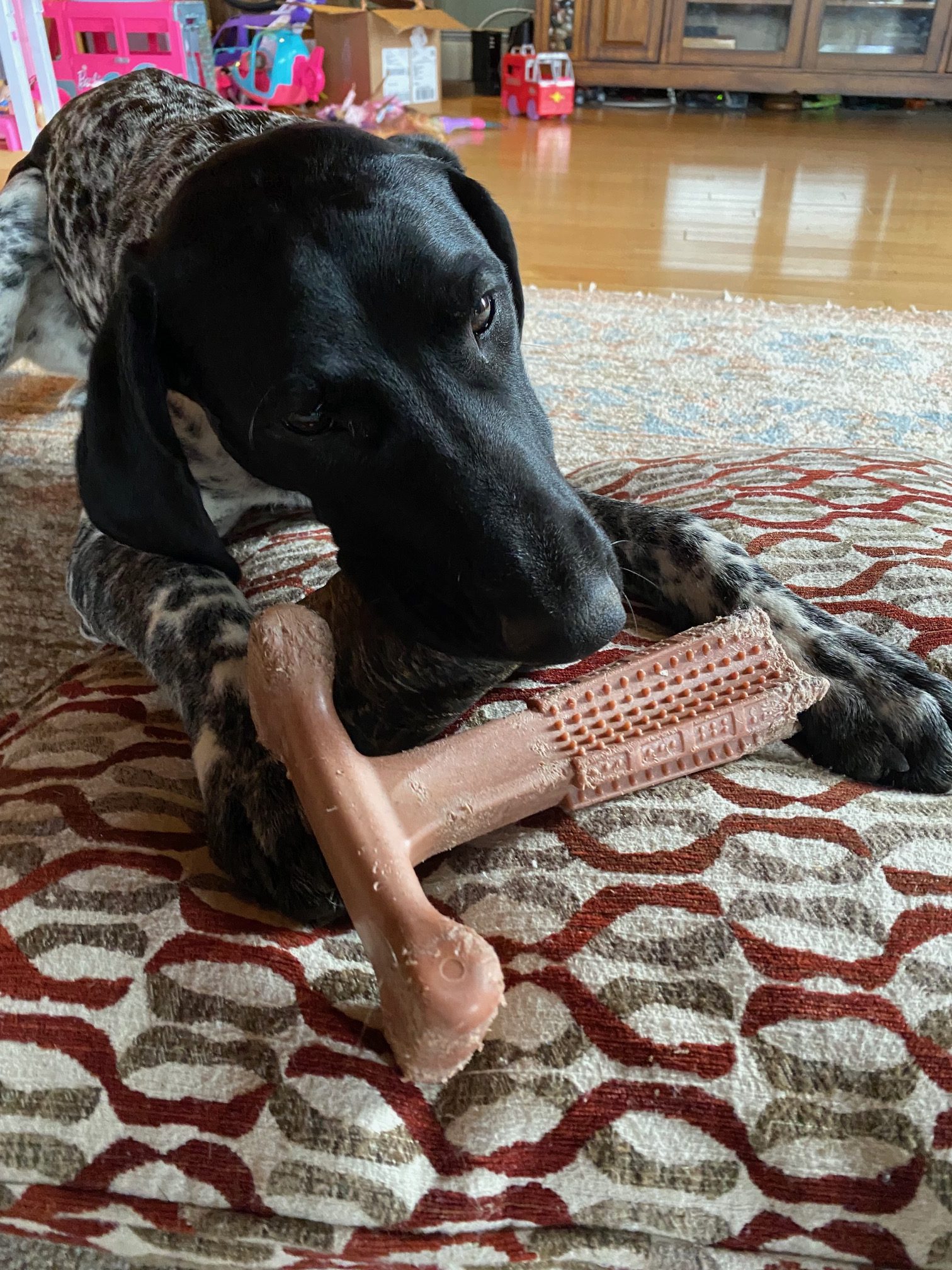
Durable chew toys designed for aggressive chewers work best for GSPs.
Examples include heavy-duty rubber toys and nylon chew rings that can withstand strong jaws.
Rotating toys every few days also helps prevent boredom.
Step 3: Use Training to Interrupt Bad Behavior
When you catch your dog chewing something they shouldn’t:
- Give a firm “No”
- Remove the item
- Immediately redirect to an approved chew toy
- Praise when they chew the correct item
Consistency is critical.
Many hunting dog trainers also use a whistle to quickly get a dog’s attention during corrections.
A popular option among bird dog trainers is the Roy Gonia Special Whistle, which carries well in the field and is easy for dogs to recognize. I like the version without the pea to keep the volume a little lower when the pup is young.
Step 4: Practice Recall and Obedience
A GSP that responds instantly to commands is much easier to manage indoors.
Training with a long lead allows you to practice recall while still giving your dog room to move.
This becomes especially important as your dog transitions into field work.
If you plan to hunt with your dog eventually, tracking and location tools can also become valuable. I cover the most popular options in my guide to the best GPS collars for hunting dogs:
Many GSP owners eventually rely on these systems once their dogs begin running bigger ground.
Step 5: Reward Good Behavior
German Shorthaired Pointers respond extremely well to positive reinforcement.
Whenever your dog:
- Chooses a chew toy instead of furniture
- Responds to a command
- Stops chewing when corrected
Reward them immediately.
Keeping treats nearby during training helps reinforce the right behavior quickly.
Common GSP Chewing Mistakes
Many owners accidentally make the problem worse without realizing it.
Not Enough Exercise
This is the most common cause of destructive behavior in high-energy hunting breeds.
Giving Soft Toys
Plush toys are often destroyed in minutes by a young GSP.
Stick with heavy-duty chew toys designed for aggressive chewers.
Inconsistent Correction
Dogs learn through repetition. If chewing is corrected sometimes but ignored other times, the behavior will continue.
When Do GSPs Grow Out of Chewing?
Most German Shorthaired Pointers begin to calm down between 18 months and 3 years old.
However, even adult GSPs still need:
- Daily exercise
- Mental stimulation
- Structured training
Without those outlets, destructive behavior can return.
Final Thoughts
Chewing isn’t a “bad dog” problem — it’s usually an energy and stimulation problem.
If you focus on:
- Daily exercise
- Redirecting chewing
- Consistent training
your German Shorthaired Pointer will quickly learn what they can and cannot chew.
If you’re raising a young hunting dog, it’s also worth making sure you have the right equipment from the start. You can check out my full guide here:
With the right structure and tools, even the most destructive GSP puppy can grow into a well-behaved hunting companion.
We publish field-tested gear reviews, training guidance, and safety resources specifically for German Shorthaired Pointer owners who hunt, train, and live with their dogs year-round.